Why Did 7 Specialists Fail Me - and What Finally Quieted My Tinnitus?
You've seen specialists. Your audiogram came back normal. The ringing has only gotten louder. This article explains what every test you took was missing - and what one neurologist discovered after reviewing 2,800+ tinnitus brain scans.

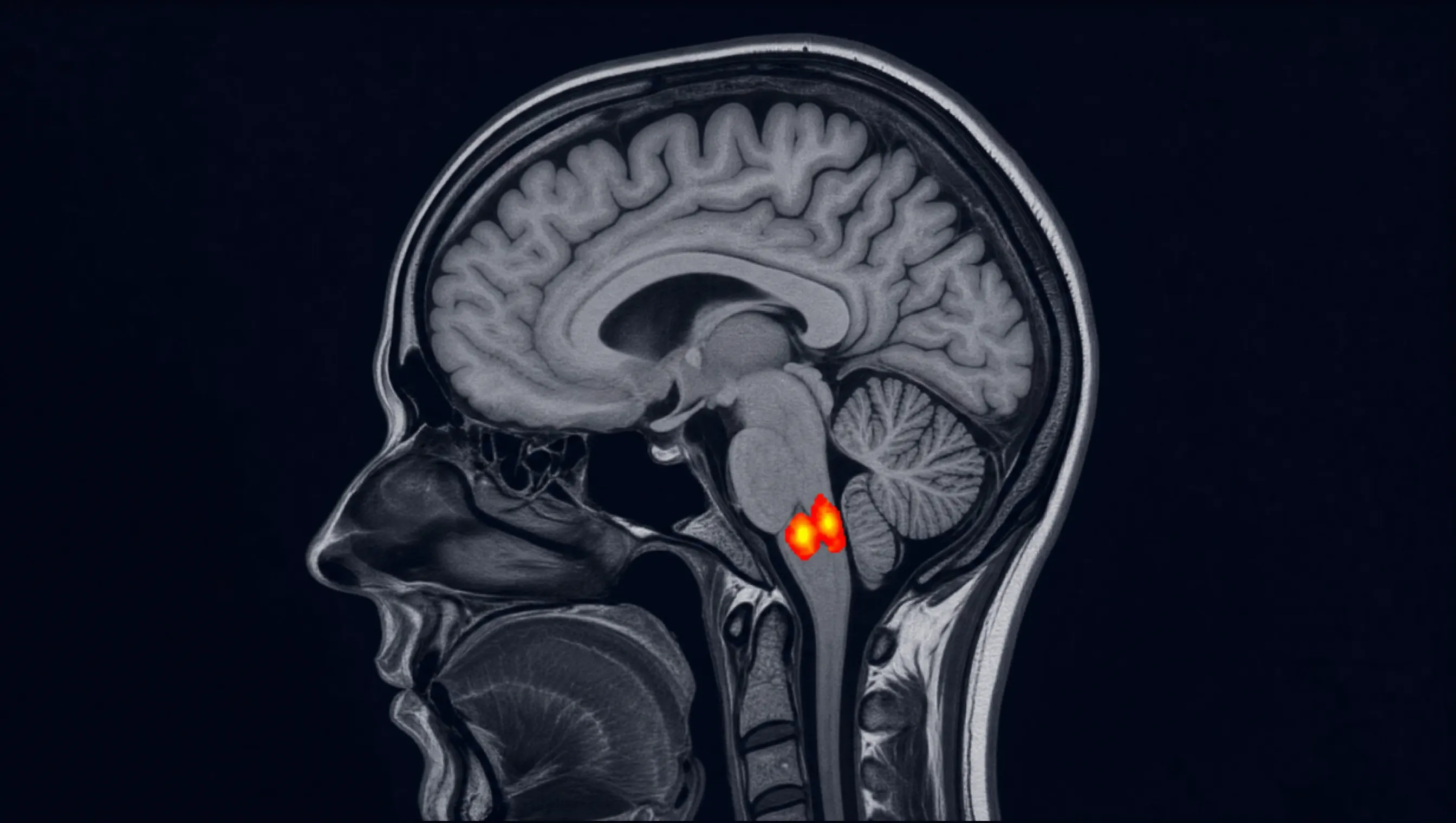
By now, your tinnitus has stopped being about the ringing - and started being about everything else.
- You lie awake at 3am trying to decide whether the sound is real or only in your head.
- You've asked someone, a spouse, a parent, a friend, to lie still in the room and tell you if they could hear it. They couldn't. You felt foolish for asking.
- The first seven seconds of consciousness in the morning set the tone for the entire day.
- You've spent at least $2,500 on things that didn't work: night guards, white noise machines, Lipo-Flavonoid, magnesium tablets, melatonin.
- You've stopped telling new people about it because explaining it has become exhausting.
We know this because 50 million Americans live with tinnitus, and almost every one of them has been told by a specialist that nothing can be done.
I'm Dr. Marcus Wei. I'm a neurologist with a subspecialty in central auditory processing. I've reviewed brain imaging on more than 2,800 chronic tinnitus patients over 15 years.
And when my own tinnitus started at 51, I realized something every audiologist on my list had missed.
If 50 million Americans have tinnitus, why is every specialist still telling us to "learn to live with it"?

In the last 20-30 years, modern medicine has solved problems we once thought were unsolvable.
Cancer survival rates are at all-time highs.
Severe depression now has effective treatments.
Chronic pain, once considered untreatable, has half a dozen viable management protocols.
Sleep disorders that used to wreck lives are now handled in a fifteen-minute appointment.
It's truly remarkable what modern medicine can do now.
But not with tinnitus.
If you have ringing in your ears, the script is always the same:
The ENT says: "Your ears, nose, and throat look fine. I can't help you anymore."
The audiologist says: "Perfect hearing. Try a pillow speaker with rain sounds and try not to think about it."
The second ENT says: "Learn to live with it."
The neurologist looks at your MRI and says: "No acoustic neuroma. You're fine."
The family doctor says: "Have you tried Lipo-Flavonoid?"
Every specialist has a script. Not one of them has an answer.
Are 50 million Americans really going to spend the rest of their lives lying awake at 3am, while every other condition finally gets a fix?
First, you need to understand how your brain actually processes sound.
- SOUND ENTERS YOUR EAR
- THE AUDITORY NERVE CARRIES THE SIGNAL TO YOUR BRAINSTEM
- THE DCN RELAY DECIDES WHAT TO FORWARD AND WHAT TO SUPPRESS
The reason tinnitus is so difficult to fix is because of how this relay works.
Your ear isn't an on/off microphone. It produces electrical signals constantly, even in a silent room. Your inner ear is always generating background noise.
If your brain processed every one of those signals, you'd hear ringing 24/7. From the day you were born.
You don't. Because of the relay.
The dorsal cochlear nucleus, your DCN, sits at the base of your brainstem, just above where your spinal cord meets your skull. Its job is to decide which signals get forwarded up to your brain and which signals get suppressed.
When the relay is working, you hear what matters and miss what doesn't. The background noise from your ear gets filtered out before it ever reaches your conscious mind.
When the relay stops suppressing, the background noise stops being background. It becomes ringing.
And that's where every audiologist, every ENT, and every neurologist on your list has been looking in the wrong place.
The audiogram tests your ear.
The MRI looks for tumors.
The tympanogram checks your eardrum pressure.
None of these tests the relay.
So why does the relay stop suppressing?
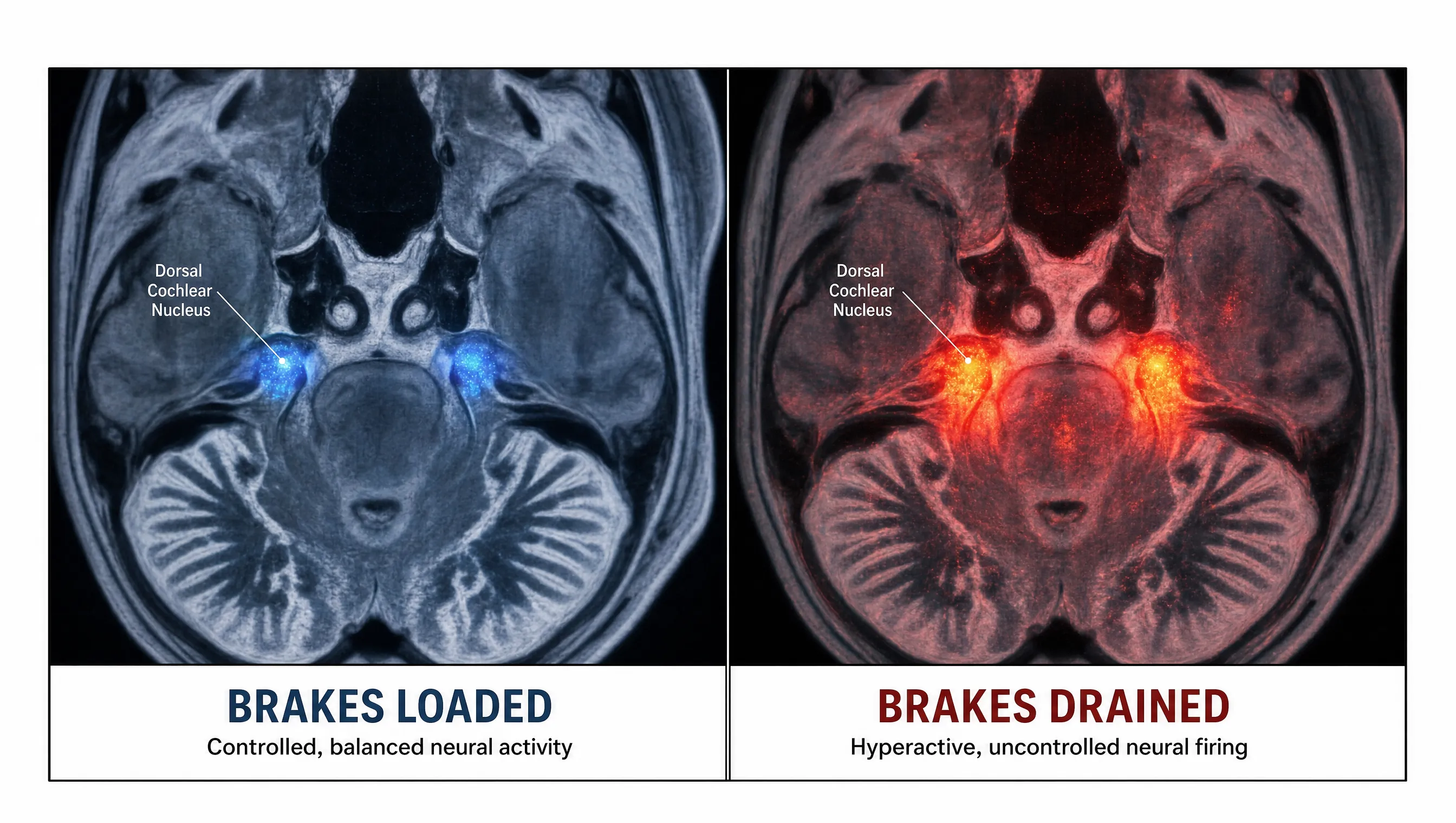
The DCN runs on two brakes.
Brake 1 - Magnesium. A magnesium ion sits physically inside a receptor in the relay, blocking it from firing unless a strong enough signal arrives to displace it. As long as that brake is loaded, background noise stays suppressed.
The problem is that magnesium gets depleted. Stress depletes it. Screens deplete it. Caffeine, alcohol, age, and most prescription medications all deplete it.
When magnesium runs low, the receptor starts firing on signals it should have ignored.
That's what you hear at 11pm when the room goes quiet. The relay firing on background it should have suppressed.
Brake 2 - Glycine. Glycine is the brain's main inhibitory neurotransmitter. At the DCN, it tells neighboring neurons to be quiet. When glycine runs low, and it gets low under chronic stress and after years of fragmented sleep, inhibitory tone collapses. The relay fires constantly.
That's what you hear at 3am when you wake up and the ringing is louder than when you fell asleep.
The leak that drains both brakes is your daytime cortisol load.
Every hour you're awake, signals flood into the DCN from three different directions:
- The auditory nerve from your stressed ear
- The trigeminal nerve from your clenched jaw
- The cervical nerves from your tense neck
By the time you lie down at 11pm, the brakes have been running all day. They're empty.
That's why the ringing is worse at night. That's why it's loudest first thing in the morning. That's why a night guard helps a little, but only a little, and why a quiet room makes it worse, not better.
And here's something you've probably noticed yourself: if you clench your jaw, press the back of your neck, open your mouth wide, turn your head, or tuck your chin, the pitch or the volume of the ringing changes.
That isn't a quirk. That's the relay reading off body signals it should have ignored.
The audiogram tested none of this. It was never going to.
So why hasn't a single specialist in your gauntlet mentioned the relay?
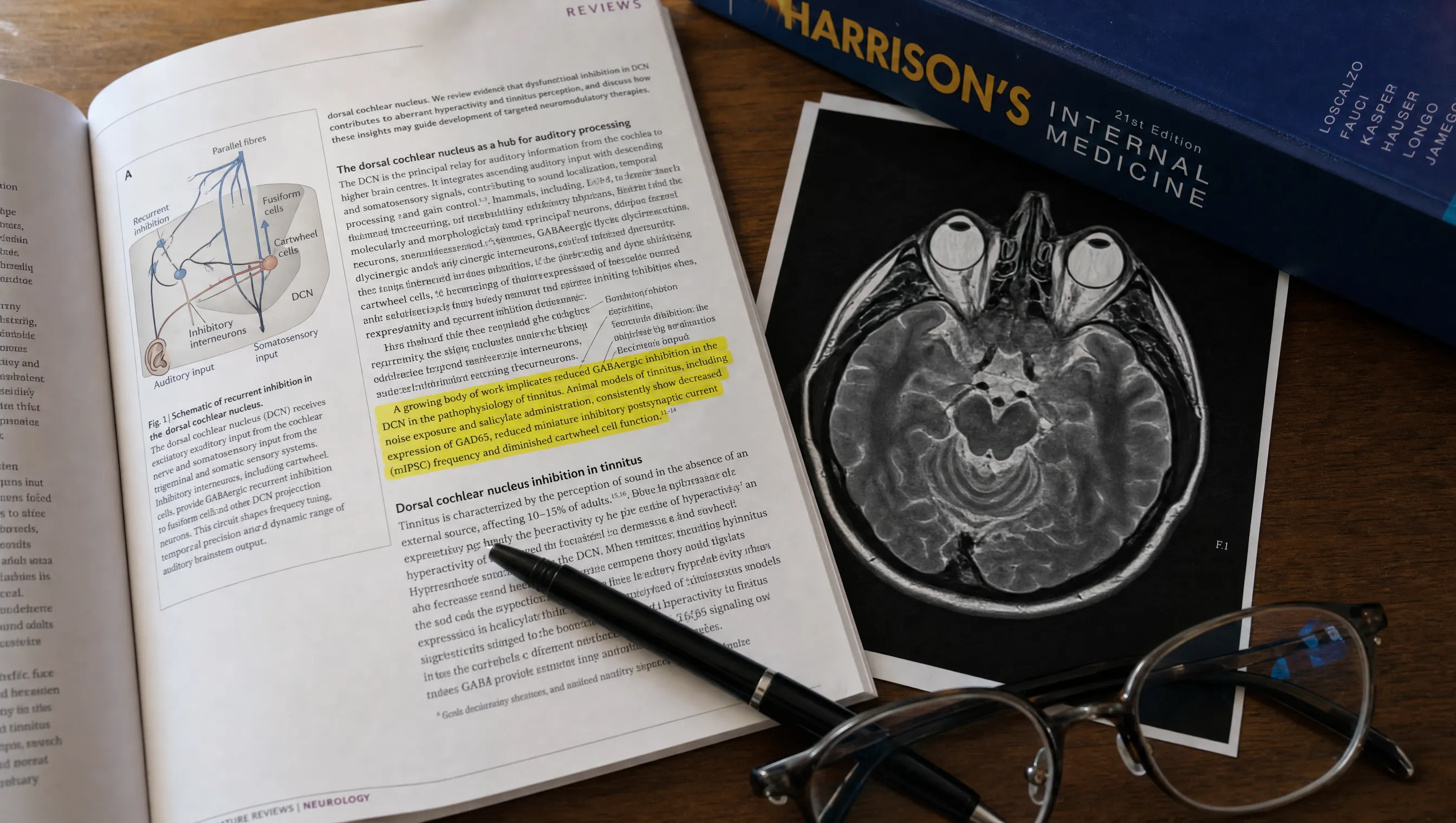
Because no specialist in your gauntlet is trained to look there.
Your audiologist's training stops at the cochlea.
Your ENT's training stops at infections and tumors.
Your dentist's training stops at your jaw.
Your sleep specialist's training stops at apnea.
Your neurologist's training stops at strokes and seizures.
The DCN is upstream of every test they run. It sits in the brainstem, a region none of these specialties is trained to investigate for tinnitus.
One of my patients put it bluntly: "They're like a pyramid scheme. Each one sends you to the next. Nobody owns the answer. Everyone owns the invoice."
It's not that they're bad doctors. It's that the relay is not in their specialty.
There is also no drug company building a treatment for it. Tinnitus isn't a single-pathway problem that responds to a single molecule. It's a brake-system failure. You can't patent magnesium. You can't patent glycine. There is no $50,000-per-year drug to be made.
So the relay has been sitting there for two decades, described in the neurology literature, ignored by the specialties that see tinnitus patients.
The good news is that the fix doesn't require a drug company. It requires the right brakes, at the right dose, at the right time of day.
And that you can do tonight.
If your doctors aren't going to refill the brakes, what should you actually do?
 LIFE WITH TINNITUS
 LIFE WITH QUIETER MORNINGS
You can keep waiting for someone to look at the relay. Or you can refill the brakes yourself.
But here's what I need you to understand about waiting:
Tinnitus is not the destination wound. Tinnitus is the warning.
The destination wound is what happens to a brain and a body that have not had a full night of deep sleep in eight, eleven, or fourteen years.
I have seen it dozens of times in my office. The 58-year-old patient who came in for tinnitus and left with a 1.2-standard-deviation drop in her cognitive baseline. The 62-year-old who fell in his bathroom at 3am from sleep deprivation and broke his hip.
They were not unusual cases. They are what the typical specialist-gauntlet patient looks like after a decade of being told nothing is wrong.
The ringing was no longer the worst thing happening to them.
You don't get those years back.
So what are your options?
DO NOTHING
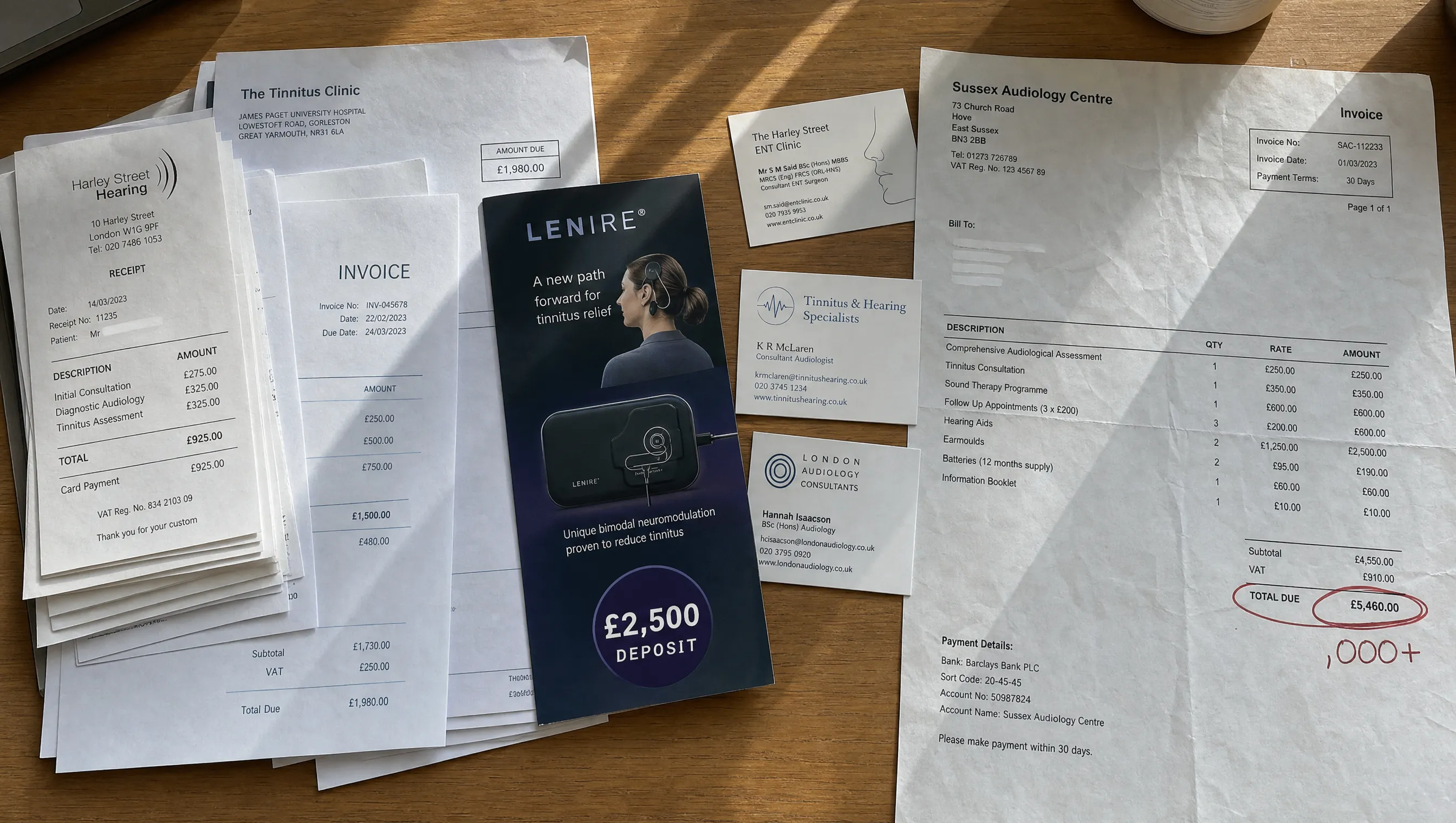 KEEP THE GAUNTLET
$8,000+
KEEP THE GAUNTLET
$8,000+
You really have three options.
Option 1 - Do Nothing.
Keep losing sleep. Keep being dismissed by specialists who don't read the brainstem literature. Keep waiting for the destination wound to arrive.
This is what most tinnitus sufferers actually choose, not because it's a good option, but because they've run out of energy to fight.
Option 2 - Go Back Into The Gauntlet.
The Lenire device: $4,500 deposit, no refund, no guarantee, electrical stimulation of the wrong nerve.
The custom TMJ splint your dentist will recommend: $6,000, treats your jaw, not your relay.
The hearing aids your audiologist will try to upsell you on: $4,000+, treats your ears, not your relay.
A new ENT appointment so a third specialist can tell you "your tests look fine."
Average cost over five years for a serious tinnitus sufferer: $8,000 to $20,000.
Most of the patients in my office have already spent this. They are still ringing.
Option 3 - Refill The Brakes Yourself.
A 90-night protocol you can start tonight. Two capsules, 30 minutes before bed. Designed around the actual mechanism, not a workaround, not a mask.
Costs less than one Lenire deposit. Less than one TMJ splint. Less than one hearing-aid fitting.
Which is exactly what I built next.
It's called Noxtee.
What is Noxtee?
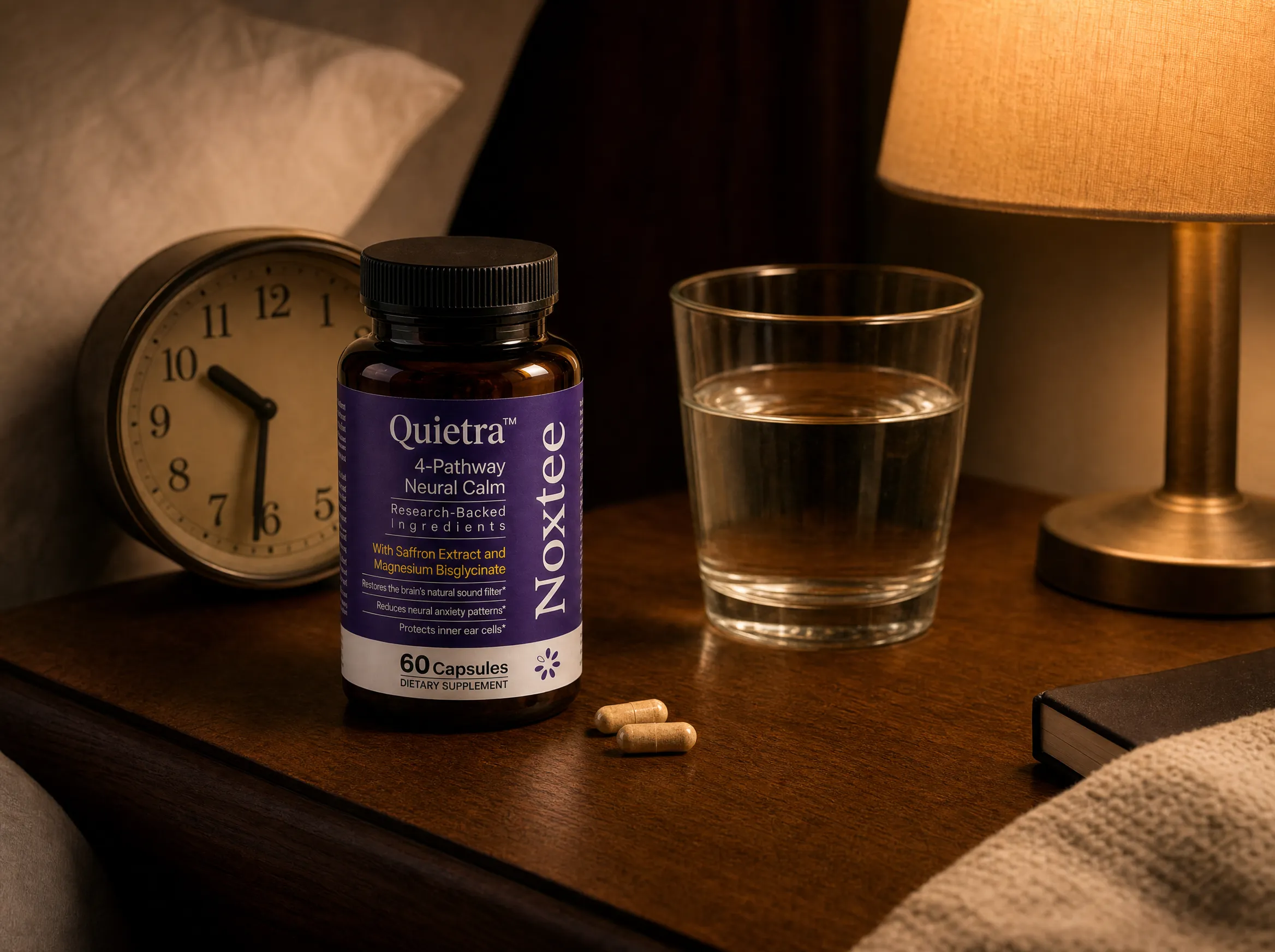
Noxtee is two capsules. You take them 30 minutes before bed.
That's it.
No machine to plug in. No splint to fit. No 45-minute video to watch. No deposit, no waiting list, no appointment to schedule.
The capsules contain the active compounds at the doses the neurology literature has used for two decades, formulated to do one thing: refill the brakes at the relay, exactly when the relay needs them loaded most.
Not a workaround. Not a mask. Not a distraction.
A direct refill of the system your body is supposed to be running on, at the time of night your body is supposed to be running on it.
But a refill protocol has to do more than deliver the right ingredients. It has to deliver them in the right form, at the right dose, at the right time, or you might as well be taking nothing at all.
How does Noxtee refill the brakes?
NeuroBrake
4 compounds · 1 target: the DCN brake system
The only form of magnesium that crosses the blood-brain barrier in meaningful amounts.
The Yamadera 2007 dose. The dose that actually reaches the DCN's inhibitory synapse.
Patches the daytime cortisol drain that empties both brakes before bed.
So the brakes don't drain again at 3am, when most patients wake to louder ringing.
Noxtee contains a formula I call NeuroBrake.
Four compounds. Each chosen for one job at the dose the literature has validated. Together they refill the system the DCN actually runs on.
Magnesium bisglycinate, 200mg elemental.
The only form of magnesium that crosses the blood-brain barrier in meaningful amounts. The glycine molecule physically escorts the magnesium across. Magnesium oxide, the form sold in every drugstore, does not cross. Magnesium citrate barely does.
If you've been taking generic magnesium for your tinnitus and it didn't work, this is why. You weren't getting it to the relay. It went through your gut, into your bladder, and out.
Glycine, 3 grams.
The Yamadera Tokyo 2007 dose. The dose the sleep-research literature has used for two decades. The dose that actually reaches the DCN's inhibitory synapse in a quantity large enough to matter.
Most magnesium-glycinate supplements on the shelf contain a few hundred milligrams of glycine, about one-tenth of a working dose. That is not a dose. It is a gesture.
L-theanine, 200mg.
Slows the daytime cortisol leak that drains both brakes before you ever lie down. Cortisol is the leak. Theanine is the patch.
Saffron extract, 28mg.
Supports inhibitory tone through the night, so the brakes don't drain again at 3am when most patients wake to a louder ringing.
This formula reflects what's validated across the brainstem-inhibition literature: Yamadera (2007) [5], Brozoski (2002) [6], Schaette (2011) [7], and the 2026 Nature Reviews Neurology paper on DCN inhibition [8].
Four compounds. Two capsules. Thirty minutes before bed.
The right ingredients, in the right form, at the right doses, at the time the relay needs them most.
So how much does it cost?
This is the most important part.
Noxtee was designed to be affordable for every tinnitus sufferer in America, not just the patients with $20,000 to burn on the specialist gauntlet. Not just the ones who can afford a Lenire deposit. Every sufferer.
So I built it to be sold direct. No middleman. No clinic markup. No audiologist commission.
The retail price of a single bottle is $69. That covers production, the blood-brain-barrier-grade ingredients, third-party testing, bottling, and shipping to your door.
For context: $69 is less than 1% of what a serious tinnitus patient spends in their first five years on the gauntlet.
But $69 is not what you have to pay today.
Because there is a way to get Noxtee for less.
How do I get Noxtee for less than $42?
For readers of this article, there is a reader-only price active right now.
$69 retail → $41.40 per bottle.
That's the price for a single 30-night bottle, shipped to your door. No middleman. No clinic markup.
But here's the thing about the protocol: it works fastest when you give it the full window, and the full window is the 90 nights your guarantee covers (more on the guarantee next).
For 90 nights of Noxtee, the per-bottle price drops to $31.80, the 3-bottle reader stack, with free shipping included.
Most readers choose the 3-bottle stack for one reason. Some patients respond by night 14. Some by night 30. Some take longer to refill the brakes, especially if they've been running on empty for 10+ years.
The 3-bottle stack means you don't run out before you find out which group you're in.
You won't see a lower price for Noxtee. We don't run Black Friday sales on a brainstem refill protocol. This is the price.
What readers are saying after the 90-night protocol
"Slept through the night for the first time since 2017."
3am. I was on my bathroom floor googling tinnitus for the 400th time. I'd already tried Lipo-Flavonoid (60 days, nothing, $89 down the drain), magnesium oxide from CVS, melatonin, and I'd been sleeping with a fan for eleven years. My ENT said "your hearing is perfect for your age." That was three years ago. I stopped going back.
Found this article on Facebook. Didn't trust it, I've been burned too many times. Ordered the 3-bottle anyway because what else was I going to do.
Night 11, I slept straight through to 6am. I sat on the side of the bed and cried because I didn't know what time it was supposed to be. It's not a miracle. The ringing is still there. But it's not the loudest thing in my head anymore.
"Started at an 8. Down to a 3. I have the sticky notes."
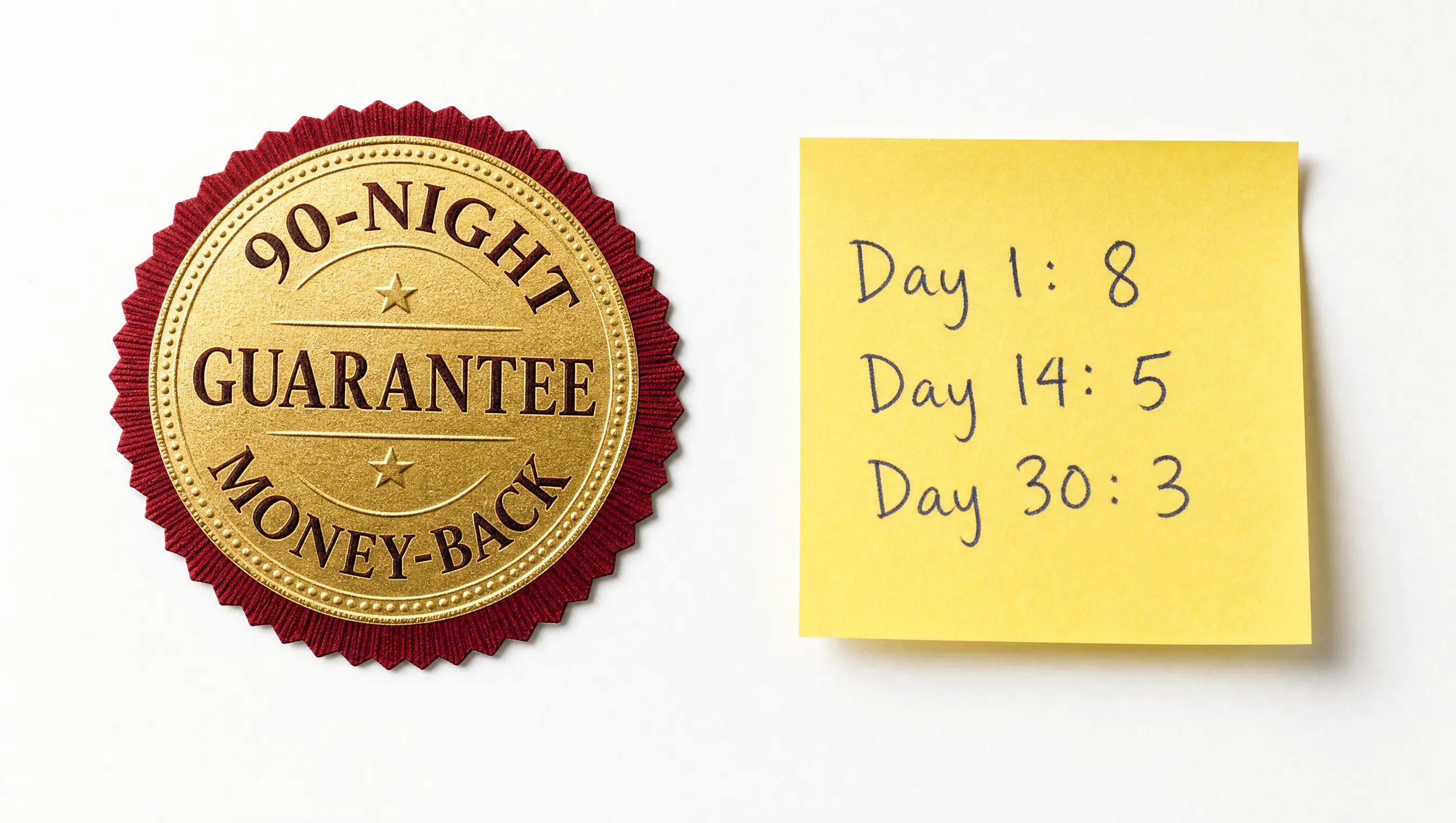
I tracked the morning number on a sticky note next to my bed like the article said. Day 1: 8. Day 7: 7. Day 14: 5. Day 30: 3. I've had this ringing since 2014. I've seen four specialists: two ENTs, a neurologist, my dentist for the $4,200 night guard he was sure would fix it. None of them ever talked about a relay in my brainstem.
I'm not saying it's gone. I'm saying when I wake up now I have to remember to check, instead of waking up to it being the first thing I notice.
That's the difference. Whoever needs to read this, read it.
"I spent $6,400 on a Lenire and a splint. Noxtee is what worked."
I want to put a number on this so other people know. I paid the $4,500 Lenire deposit (which they don't refund). I paid my dentist $1,900 for a custom splint. I'd already done the audiologist visits, the magnesium tablets, the white noise app on my phone every single night for nine years. Nothing.
Two bottles of Noxtee cost me less than the dentist appointment that fitted the splint that didn't work. By the third week I noticed I wasn't checking my left ear every time the room went quiet.
I'm 62. I'm angry at every doctor who told me this was just part of getting older. I'm also relieved.
"My husband said 'you stopped pulling on your ear.'"
I didn't even know I was doing it. My husband told me a month after I started taking these. He said I used to tug on my right earlobe constantly, especially at dinner and when I was trying to fall asleep. He'd been watching me do it for years. He thought it was a tic.
It wasn't a tic. It was me trying to make the ringing change pitch by pulling on something. The relay was reading off body signals like the article said.
I'm not perfect. Some mornings are still loud. But my husband doesn't ask me anymore "did you hear what I just said." I think that part is more important than the ringing.





*Paid sponsored content
You Have 90 Nights To Test The Protocol. If Your Numbers Don't Drop, We Refund You.
A real protocol comes with a real guarantee.
You have 90 nights to test Noxtee in your actual life. Track your morning number on a sticky note like the article asks. If you don't see your numbers drop, or worse, if they get louder instead of quieter, email us. We refund the entire purchase. The full price of every bottle you ordered, including the ones you've already taken.
No questionnaire. No quiz. No return shipping. No "please tell us why you're unhappy" email loop.
Keep what's left in the bottle. We don't want it back.
This is what I call worsening-protected: most supplement guarantees only refund you if the product didn't work. We refund you if the product made things worse, too.
If your nights get quieter, you keep the bottles. If they don't, you keep the money. That's the deal.
What to do next?
All you need to do is click the green button below.
You'll go to a reservation page where you can choose 1, 2, or 3 bottles at the reader price.
Most readers choose the 3-bottle stack, that's the full 90-night protocol in one order, matched to your guarantee window.
Free shipping included on 2-bottle and 3-bottle stacks.
Our customer support team is available 24/7 if you need help with your order or have a question about the protocol.
Reserve before this week's 5,400 bottles are gone, the next cohort waits 90+ days.
Reserve My Bottles - Reader PriceRemember why this matters
Fixing your nights is much more important than just quieting the ringing.
- The nights you get back are the brain you get back. Every full night of deep sleep is a deposit on cognitive function, memory, and mood.
- The morning ringing no longer sets the entire day. The first seven seconds of consciousness stop being about your left ear.
- The relationships you've quietly been losing, the conversations you stopped having, the partner who learned to stop asking, start coming back.
- The dollar bleed stops. No more $4,500 deposits. No more $6,000 splints. No more $89 supplement bottles in the back of the drawer.
- You stop being a tinnitus patient. You go back to being the person you were before.
You don't get those years back. But you get the next ones, starting tonight.
Click the green button below to reserve your Noxtee at the reader price.
Reserve My Bottles - Reader Price
Just placed my order. I've never seen anyone explain it like this, the relay, the brakes. My ENT spent 6 minutes with me last year and told me to try a noise app.
Would love to hear from anyone who's been on this for 3+ months. Did the effect hold or did your numbers creep back up?
Frank T. I'm at month 4. Numbers held. I went off for 2 weeks in March to test it, they crept back up by week 2. Started again, they came back down. It's the protocol that holds, not magic.
Same. Month 7. I'm a believer.
It is a blessing to know that someone is actually researching this. Prayers for all of us who have suffered.
I've spent so much on tinnitus "cures" I lost count. I'll be honest, I'm still a little skeptical. But the explanation about the audiogram not testing the brainstem, I felt that in my bones. Ordering one bottle to test.
James W. I was the same way. Started with one bottle. Bought two more after night 14. You'll see.
Been ringing since '06, Iraq. VA gave me a Sound Oasis. Nothing else. Will try this. Thank you for taking us seriously.
Does this ship to Canada? Mine has been driving me crazy for years.
Hi Linda, yes, shipping to Canada is available at checkout.
I'm on a blood thinner. Anyone know if this is okay to take with that?
Karen S. I asked my pharmacist. She said it's a clean stack, glycine and magnesium are food-derived. Always check with your own doctor though.
My wife has had ringing for 12 years. She's tired of trying things. I'm going to order this for her birthday. Wish us luck.
George B. You sound like a good husband. Tell her about the article first, she needs to read it herself. Don't just give her the bottle.
Sandra E. Good point. I will.
How is this different from Lipo-Flavonoid? I spent $90 on that last year.
Patricia M. The article explains it, Lipo doesn't cross the blood-brain barrier. This one does because of the bisglycinate form. Different mechanism, different target.
This is the first article that made me feel like I wasn't crazy.
Day 22. Wife says I stopped tugging at my ear at dinner. I didn't know I was doing that.
Praying this works. My granddaughter graduates in June and I want to hear her speech without the ringing in my head.